
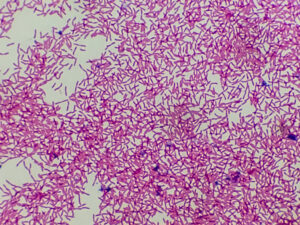
Chinese Hamster Ovary (CHO) cells are considered the gold standard in the production of biologics. Shown here at 100x.
Biologics acting as targeted therapies have changed the foundations of modern medicine and given immense hope to patients suffering from previously considered untreatable diseases. As biological drug substance development evolves and technology becomes more and more refined, the range of these promising biomolecules can vary substantially in terms of their structure and characteristics. Despite the wide range of indications, the methods of production for biological substances are limited and often leverage either mammalian or microbial expression systems. Historically, mammalian has been employed for more applications, but with recent advances in microbial fermentation, both systems can now be applied to a variety of biologics such as enzymes, cytokines, monoclonal antibodies, hormones, proteins, and bioconjugates.
Starting with the End in Mind
Selecting the appropriate expression system for your molecule’s application is paramount. Each system has its advantages and challenges. The key for both microbial fermentation and mammalian cell culture is successfully manipulating the target DNA inserted into the host to produce the desired biological drug substance at the highest yield and purity possible.
Clone selection is a critical consideration at the beginning of the process development process. Bacteria (E. coli) and yeast (pichia pastoris) are the most common microbial expression systems whereas CHO (Chinese Hamster Ovary) cells are the primary mammalian cell utilized. Transforming DNA into E. coli, and selecting a clone with the correct DNA is simpler than the transfection process with mammalian cells, which often requires screening thousands of mammalian cell clones to get the perfect one for your system. Mammalian cells also require more screening for viral infections or pathogens but are better suited for any product that needs glycosylation; microbes, by nature, do not add polysaccharides to proteins, and the methods of adding them through a chemical moiety in vitro can be complex.
While both systems offer robust manufacturing capacity and a broad range of production scales, there are other considerations during process development and scale-up of microbial and mammalian expression platforms. Fermentation process development can typically be much faster and less technically challenging due to the simplistic nature of microbial systems and the historically vetted methods of optimizing processes in E. coli. Not only is the microbial culture media less complex, but it is also less expensive than most mammalian cell culture media. This is because mammalian processes require a very finetuned mixture of multiple media components that support growth and viability. Once optimized, mammalian expression systems typically have much higher product yields than fermentation platforms.
System Scale-up Success
A microbial process versus a mammalian process has many factors that play into optimal production process design. These nuances highlight the importance of a CDMO partner with integrated analytical development and adherence to Quality by Design (QbD) principles throughout process development to achieve a successful manufacturing platform. For example, microbial processes benefit from a faster growth rate (sometimes reaching split density in hours instead of days) and the more robust nature of the microbes. However, that comes with the challenges of ensuring adequate oxygen transfer and mixing. It is crucial to monitor dissolved oxygen (DO) and supplement critical supply at peak growth – in both microbial and mammalian systems.
Reactor design and impeller type play an important role during process optimization and scale-up. Single-use reactors are most commonly used in mammalian expression systems, whereas stainless steel reactors are often the choice for microbial platforms. Agitation is a key factor in both systems to balance shear (i.e. impeller speed) versus the gas transfer rate necessary to support the production platform. Because microbial systems are much more robust and can support a higher agitation rate, it’s common to pursue an aggressive scale-up strategy in terms of sparging gas flow rates and vessel volume per minute to maximize the efficiency of oxygen transfer into the fermenter. Mammalian cell lines are much less resilient to shear and require lower agitation and sparging gas flow rates.
To meet your product needs, we offer sterile stainless steel and single-use options in our CGMP facilities at the Cytovance Ingenuity Campus.
With many similarities and many differences between microbial and mammalian expression, how do you choose which one is right for your process?
It all depends on the end product you are trying to produce and how each factor plays into that process.
- Microbial platforms can be more cost-effective, faster, and have lower contamination risks but are not suited for certain molecule types and typically have much lower yields.
- Mammalian platforms can produce higher titer and have been the leading platform for biologics production for many years but require more cell line screening and can be challenging to use for smaller biologics such as peptides, proteins, growth factors, and plasmid DNA.
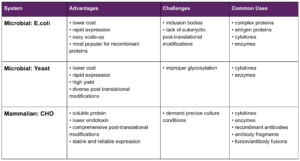
Check out this helpful chart to best understand considerations across each expression system.
Team Cytovance can help you with both your mammalian and microbial expression systems from the screening of clones and expert process design all the way to scale-up for commercial manufacturing.
- Want to learn more? Watch our “General Scale-Up Strategies: Commonalities Between Mammalian and Microbial Processes” webinar
- Need a product-specific strategy? Contact Us.
- Have an idea for an Ingenuity Blog topic? Let Us Know!